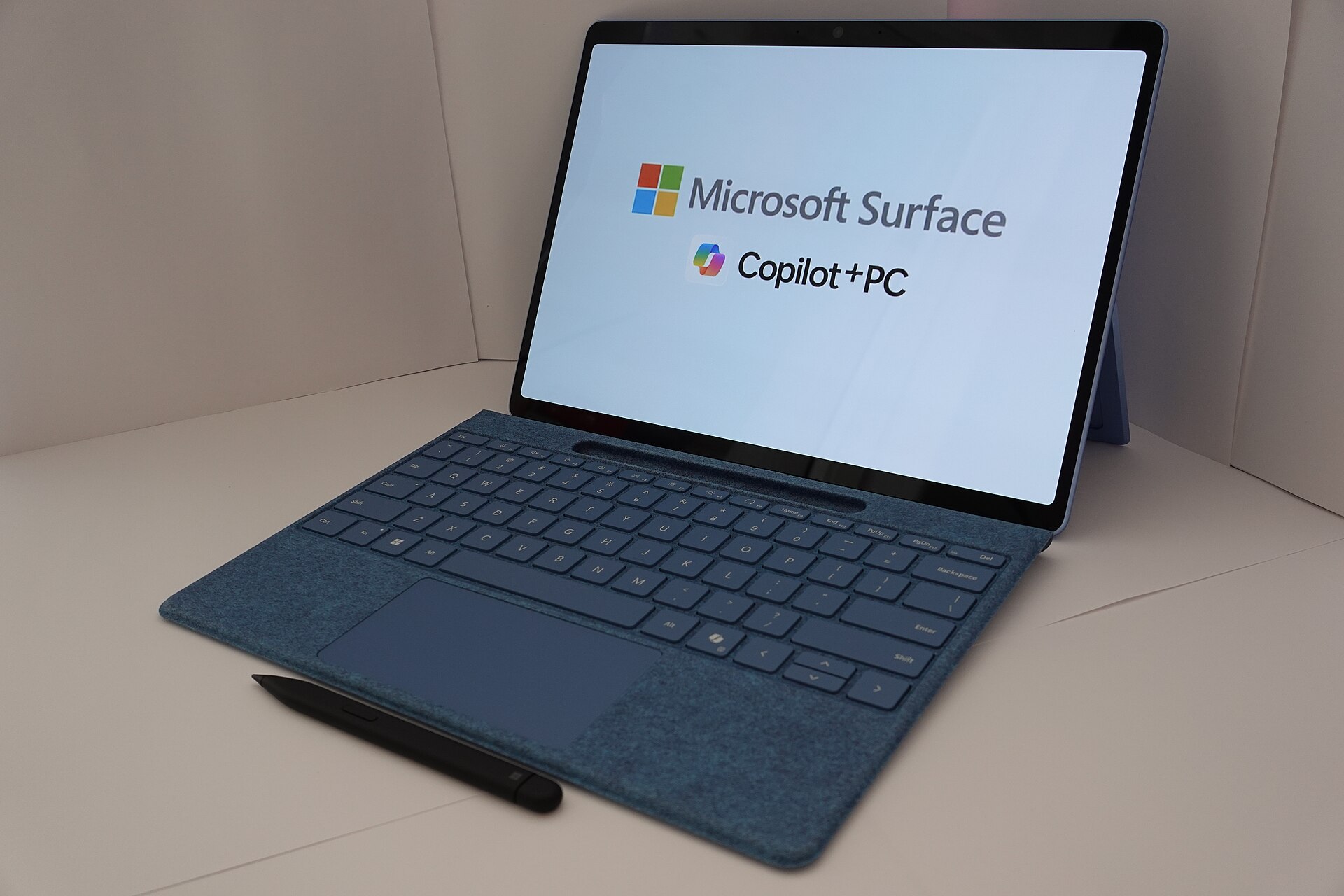
Microsoft’s most expensive laptop finally has a price and a ship date. The Surface Laptop Ultra, first shown around Computex in June, went up for preorder on Wednesday after Microsoft’s Windows and Surface event in San Francisco, and it starts shipping on October 16. Microsoft’s Surface Laptop Ultra page lists the starting price as $2,599.99, and the top configuration reported by The Verge and Windows Central costs $5,899.99. Inside is Nvidia’s new RTX Spark chip, an Arm-based design that pairs Nvidia’s Grace CPU cores with a Blackwell RTX GPU and a single pool of shared memory, and Microsoft is pitching the whole package as a MacBook Pro rival built for running AI on the laptop itself.
It isn’t alone, either. According to Tom’s Hardware, RTX Spark machines from Asus, Dell, Lenovo, HP and MSI ship the same day, alongside a Surface RTX Spark Dev Box that starts at $5,999.
What you get at each price
Every Surface Laptop Ultra shares the same 15-inch PixelSense Ultra mini-LED touchscreen (3:2, 262 PPI, up to 2,000 nits of peak HDR brightness), the same aluminum body under 18mm thick and 4.5 pounds, and the same ports: three USB-C, one USB-A, HDMI, a full-size SD card reader and a headphone jack. What changes is the chip, the memory and the storage. Nvidia’s RTX Spark spec page lists two laptop versions, an 18-core CPU with a 5,120-core GPU that tops out at 64GB, and a 20-core CPU with a 6,144-core GPU that goes to 128GB. Microsoft’s spec sheet lists memory options of 24, 32, 48, 64 and 128GB and storage from 512GB to 2TB, though only three price points have been reported so far.
| Laptop | Chip | Memory | Storage | Price | Memory bandwidth |
|---|---|---|---|---|---|
| Surface Laptop Ultra (base) | RTX Spark, 18-core CPU, 5,120-core GPU | 24GB | 512GB | $2,599.99 | Not published |
| Surface Laptop Ultra | RTX Spark, 20-core CPU, 6,144-core GPU | 32GB | 1TB | $3,699.99 | Not published |
| Surface Laptop Ultra (top) | RTX Spark, 20-core CPU, 6,144-core GPU | 128GB | 1TB | $5,899.99 | Not published |
| 16-inch MacBook Pro (base) | M5 Pro, 18-core CPU, 20-core GPU | 24GB | 1TB | $2,699 | 307GB/s |
| 16-inch MacBook Pro | M5 Max, 18-core CPU, 40-core GPU | 128GB | 2TB | $6,999 | 614GB/s |
Surface prices are from Microsoft and launch coverage. MacBook Pro prices are Apple’s list prices from its online store and AppleInsider’s price guide, and bandwidth figures are from Apple’s spec page.
A little subtraction shows where the money goes. The first step up costs $1,100 ($3,699.99 minus $2,599.99) and gets you the bigger chip, with 20% more GPU cores (6,144 versus 5,120), plus 8GB more memory and double the storage. The second step costs $2,200 for 96GB more memory with the same chip and storage, which works out to about $22.92 per extra gigabyte. Against Apple, the base Surface is $99 cheaper than the base 16-inch MacBook Pro but comes with half the storage, and the 128GB Surface is $1,099 cheaper than a 128GB 16-inch MacBook Pro, again with half the storage, since Apple’s 128GB M5 Max configuration starts at 2TB. Microsoft is also running a trade-in deal through November 23 on its own online store in the US and Canada, promising up to $1,000 back when you trade in an eligible device.
The magnetic USB-C port and the rest of the details
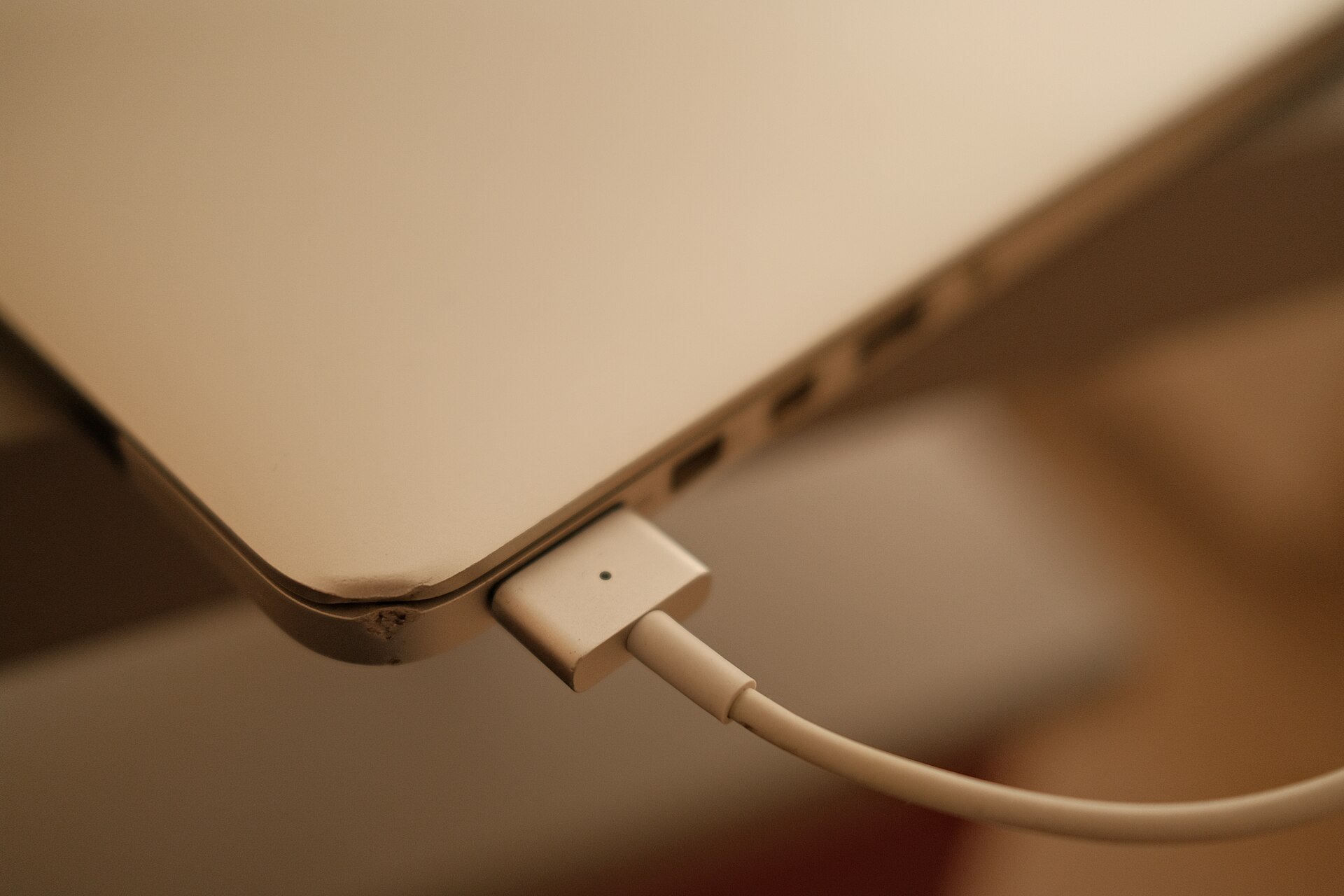
The hardware detail Microsoft talked up most is what it calls the world’s first built-in magnetic USB-C charging port. Instead of keeping its old proprietary Surface Connect plug, the company put a magnetic breakaway mechanism into one of the laptop’s USB-C ports, so a tug on the cable pops it loose rather than pulling the laptop off the table, much like Apple’s MagSafe. As The Verge’s Tom Warren notes, the magnetic cable itself is still proprietary, but the port keeps working as a normal USB-C port for video and data with any cable. Microsoft lists a 140W power adapter and the Magnetic Connect cable in the box, though its fine print says only some configurations get the 140W adapter in some markets.
Microsoft rates battery life at up to 15 hours of local video playback and up to 12 hours of web browsing from a 92Wh battery, based on its own tests of a preproduction 64GB unit. It also says the laptop keeps 99% of its performance on battery and that the new cooling system has up to 2.5 times the thermal capacity of the 15-inch Surface Laptop, per Notebookcheck. Two smaller details from Microsoft’s spec sheet are worth knowing before you order. Windows 11 Pro is listed only for the 32GB and larger configurations, and because RTX Spark is an Arm chip, apps that aren’t built for Arm run through Prism, Windows’ built-in emulator, so Microsoft itself suggests checking specialized drivers, plug-ins and older utilities first.
Nvidia used the launch to take a swing at Apple, claiming RTX Spark systems deliver up to 2.1 times faster time-to-first-token and 4.3 times faster image generation than an M5 Pro MacBook Pro. Those are Nvidia’s preliminary platform numbers, not independent tests of this laptop. Gaming got a mention too, with Microsoft saying Call of Duty is coming to RTX Spark in 2027, and CNBC reports that Meta’s Muse agent is getting a Windows app, though there’s no timeline yet.
Should you preorder?
This is Geeknewz’s opinion. The Surface Laptop Ultra looks like Microsoft’s most serious MacBook Pro competitor yet, but the base model is the one we’d think twice about. Its 24GB of memory is fine for creative apps and everyday work, yet it’s tight for the local AI that Microsoft and Nvidia are selling it on, and our local AI memory guide found that today’s popular 27B to 31B models really want 32GB. The 32GB model at $3,699.99 is the sensible starting point for AI work, and the 128GB model makes sense only if you plan to run 120B-class models locally.
If you live in Mac-only apps, this changes nothing for you. If you’re a Windows user who has been eyeing a MacBook Pro for its battery life and shared memory, it’s worth waiting for independent reviews after October 16. The things to check are real-world battery life, how well your own apps run on Arm, and the memory bandwidth Nvidia still hasn’t published, since that number decides how fast local models actually run.
Sources: Microsoft, Nvidia, Apple, AppleInsider, The Verge, Windows Central, Notebookcheck, Tom’s Hardware, CNBC.