
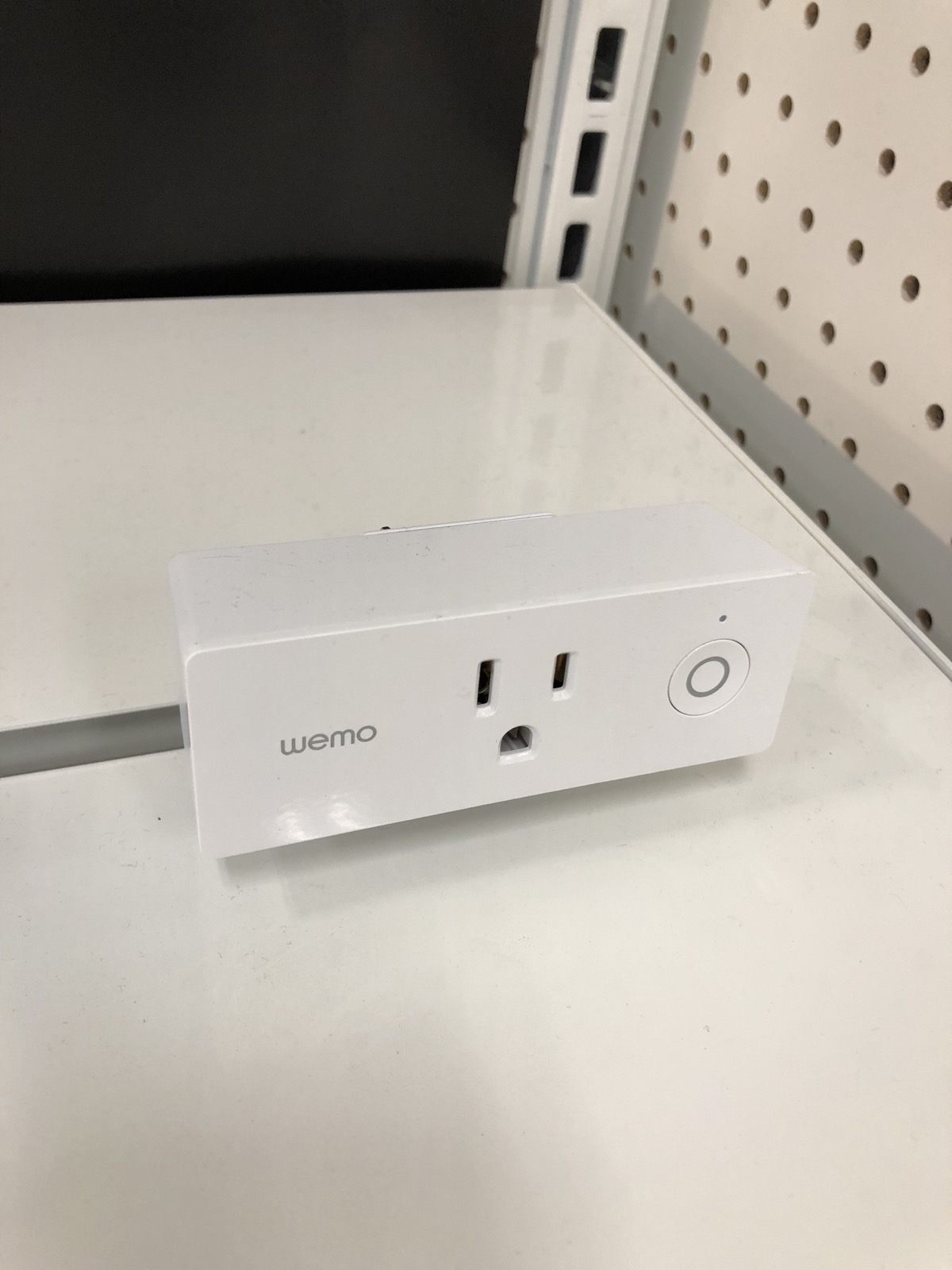
A smart plug controlling a lamp has a question to answer before the first power cut: when electricity returns, should the lamp come on, stay off or return to its previous state? That choice deserves a clear place in setup, alongside the device’s name and room. It also deserves a sentence explaining the result.
The most useful default depends on the job. A bedside lamp and a lamp operated through a wall switch can call for different behavior, even if they use identical plugs. Treating recovery as a setting for advanced users leaves an ordinary household decision unnecessarily hard to see.
This is an existing product capability, not a proposal that every manufacturer invent a new system. The Shelly Plug S control guide documents three power-on choices: on, off and restore last. That example establishes the available choices on that model; it doesn’t establish what another plug supports or which option it uses out of the box. The design opportunity is to make the choice understandable in the context of the thing plugged into it.
The last state isn’t always the next intention
“Restore last” sounds reassuring because it promises continuity. Imagine a reading lamp that was on when the power failed. If electricity returns hours later, restoring that state could illuminate an empty room or wake someone who has gone to bed. Remembering the old state would be accurate, but the household’s needs might have changed.
Always staying off has its own compromise. If someone expects a lamp to light when they turn its wall switch back on, an extra command in an app could feel like a broken switch. Always turning on might suit that expectation, while being unwelcome for the bedside lamp. None of these preferences makes the other choices wrong.
That is why a product should ask about the outcome in plain language. “After power returns: keep this outlet off” tells me more than a label such as “default relay state.” A short explanation could add that I’ll need to turn it on again. If I choose to restore the previous state, the explanation should say that the outlet may turn on again if it was on before power failed.
The wording should also identify the trigger. Electricity returning to the plug is different from the phone reconnecting to Wi-Fi or the app becoming available again. A recovery setting should explain which event it governs, without making readers infer that from a technical menu. It should describe the outlet’s behavior rather than promise that every connected appliance will resume working in the same way.
Make the decision easy to revisit
There is a reasonable objection to adding another setup question: people bought a switch, and an interview about failure modes would be tiresome. The answer is a compact choice with a visible default and one explanatory line. A product can make its initial recommendation clear without burying the decision or requiring a lesson in home automation.
The selected behavior should remain easy to find later. Moving a plug from a reading lamp to a different room changes its purpose. Renaming the device would be a sensible moment to surface its recovery setting again. An ordinary device details screen could also show the current choice, so the answer doesn’t disappear after installation.
For owners, the useful starting point is one plug and one ordinary lamp. Check the exact model’s documentation for a power-on or restoration setting, then decide what you want that outlet to do when electricity returns. Follow the manufacturer’s instructions if you confirm the behavior; don’t assume a setting described for another model applies to yours. Keep the connected device’s own controls and operating instructions in view, too.
A good smart plug should make this decision once, clearly, and let you reconsider it when the plug gets a new job. Before adding another schedule to a lamp, find out what its plug will do after the power comes back. That small choice is part of making the automation predictable.