
A power bank with several charging connections should tell you, in plain sight, what changes when you use more than one. The largest wattage on the box is a poor starting point for someone trying to keep a phone and a tablet going together.
My proposed standard is simple: put the shared charging limits beside the single-device maximum, then explain the combinations using the same port names printed on the hardware. Buyers shouldn't have to translate a collection of impressive individual specifications into a charging routine.
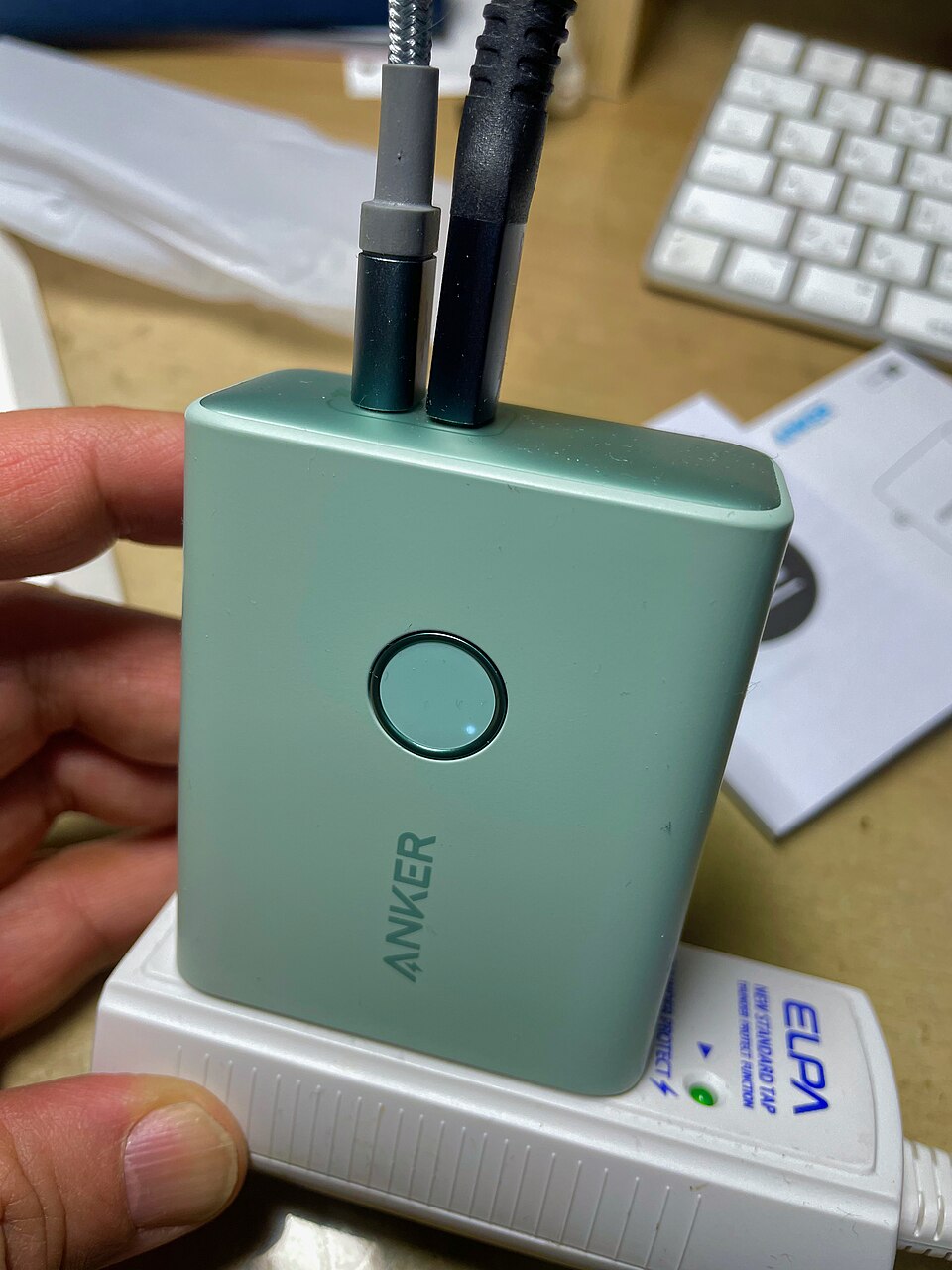
Consider Anker's Zolo Power Bank with dual built-in USB-C cables. Its name advertises 45W, while its FAQ says multi-port output is limited to 15W total. It also specifies 5V output when the built-in cable is used with the USB-A or USB-C port. Those are manufacturer specifications, not results from testing here.
The issue isn't that every connection must deliver the maximum at once. It's that a shopper needs to understand the trade-off before choosing a product for two devices.
Describe the combination you actually need
Imagine a long afternoon away from a socket. Your phone needs enough charge for the journey home, while a tablet needs to stay useful for work. A power bank that serves either device comfortably on its own might require you to choose which gets priority when both are connected.
That can be an acceptable compromise. Perhaps the phone only needs a small top-up, or you're happy to charge the tablet first and the phone later. But it belongs in the purchase decision, alongside size and weight. Discovering the compromise after you've packed one battery for two people is much less helpful.
A useful product page would show the supported output for one device, two devices and the other combinations its connections permit. Where the allocation changes with the selected ports, it should name those ports. A picture of three connected gadgets establishes the number of sockets in use; it doesn't explain the power available to each.
For buyers, start by naming the pairing you care about. “Phone and tablet together” is a clearer requirement than “something powerful.” Then find the manufacturer's shared-output information for that pairing. If it isn't clear, ask for the missing combination rather than assuming the individual maxima add together.
This also makes comparisons fairer. A modest unit with an explicit, adequate shared mode can be a better fit than a more impressive-looking one whose relevant limits remain unclear.
Recharging is another operating mode
The same clarity should apply when the power bank itself is plugged in. Treating that situation as a separate mode would stop “charges multiple devices” and “recharges quickly” from becoming an implied promise that everything happens at full speed together.
Anker's Prime Power Bank 26K, 300W FAQ illustrates why this needs its own explanation. For simultaneous charging and recharging, the company says output is about 70–80% of input, and a low-powered charger may not meet a laptop's needs. That qualification concerns this model; it isn't a universal rule for every power bank.
If your plan is to recharge a battery while it powers your computer, look for explicit documentation of that mode and its input requirements. A headline output figure alone doesn't answer the question.
Manufacturers do face a presentation problem. Listing every possible combination on the front of a box would be cluttered, and actual device behavior adds another layer. The answer needn't be a wall of specifications. One clear shared-output summary, a readable connection diagram and a link to the complete details would already improve the decision.
Nor does everyone need a high-powered multi-device model. If you only top up one phone, paying for a complicated distribution system may solve a problem you don't have. Clear limits should help you choose something simpler as readily as something more capable.
Before buying, write down your usual device pairing, whether you'll charge them together, and whether the battery must recharge at the same time. Match those situations to documented modes. Choose the power bank that explains and supports your routine, even if another one has a bigger number in its name.