
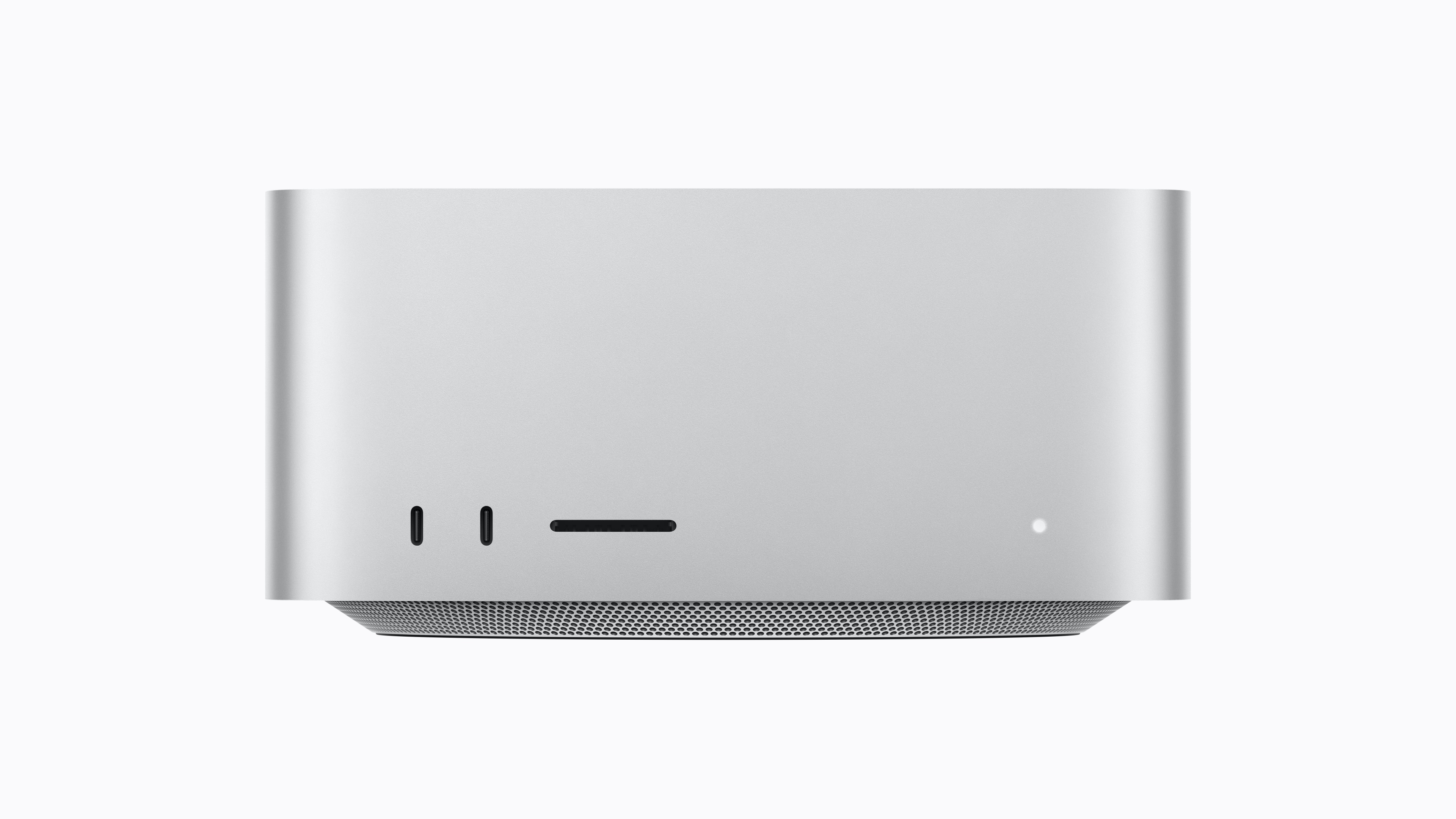
Meta’s newly downloadable Muse Spark Open can run locally on Mac Studio, but the desktop setup it’s promoting uses two machines with 512GB of memory each. If you’re picturing an AI upgrade for the Mac already sitting on your desk, check that distinction before planning a purchase.
The October 15 release gives developers another way to run and adapt a large AI model themselves. The useful question for a prospective user is whether you need that control enough to build and maintain the setup around it. Downloadable software and readily available hardware are separate parts of this announcement.
Meta’s release announcement describes a model built for coding, reasoning and tasks involving multiple steps. Its weights, the numerical settings needed to run it, are available to download. Hosted access is also available through providers including Baseten, Fireworks AI and Together AI. That gives developers a way to try it without first assembling a local cluster.
Read the memory requirement before the speed claim
Apple’s accompanying research is unusually helpful because it separates the tested configurations. In its evaluation, Muse Spark Open doesn’t fit on a single Mac Studio. The model is tested in a compressed, four-bit format across multiple M5 Ultra machines, using Apple’s MLX software and Thunderbolt connections.
At an 8,192-token context, Apple reports about 25 generated tokens per second across two machines using tensor parallelization, and about 37 across four. Those are Apple’s benchmark results, measured over 128 generated tokens. They aren’t a promise about how quickly your coding project will finish, and we haven’t independently tested the setup.
The hardware timing matters, too. The Mac Studio launch details put the 512GB memory option in late October. Don’t assume an M5 Ultra configuration you can order now is the same one described in the demonstration. Check the actual memory selection and delivery estimate before committing.
Decide what you need to keep local
For a small team, start with one representative job: a code change, document workflow or other task you can judge reliably. Decide in advance what a successful answer looks like, how long you’re willing to wait and which data must stay under your control. A fast stream of text is only useful if the result is correct enough for the job.
Hosted testing and local deployment also answer different privacy questions. If keeping a document off a provider’s servers is your reason for running locally, use a nonsensitive substitute when evaluating a hosted version.
For now, treat this as a developer deployment option with substantial hardware requirements. Try a representative workload before buying machines, and read the model’s commercial terms before building a service around it. Meta describes the release as open-weight under its Muse Model License, with limited commercial terms; a free download isn’t a blanket permission for every business use.