
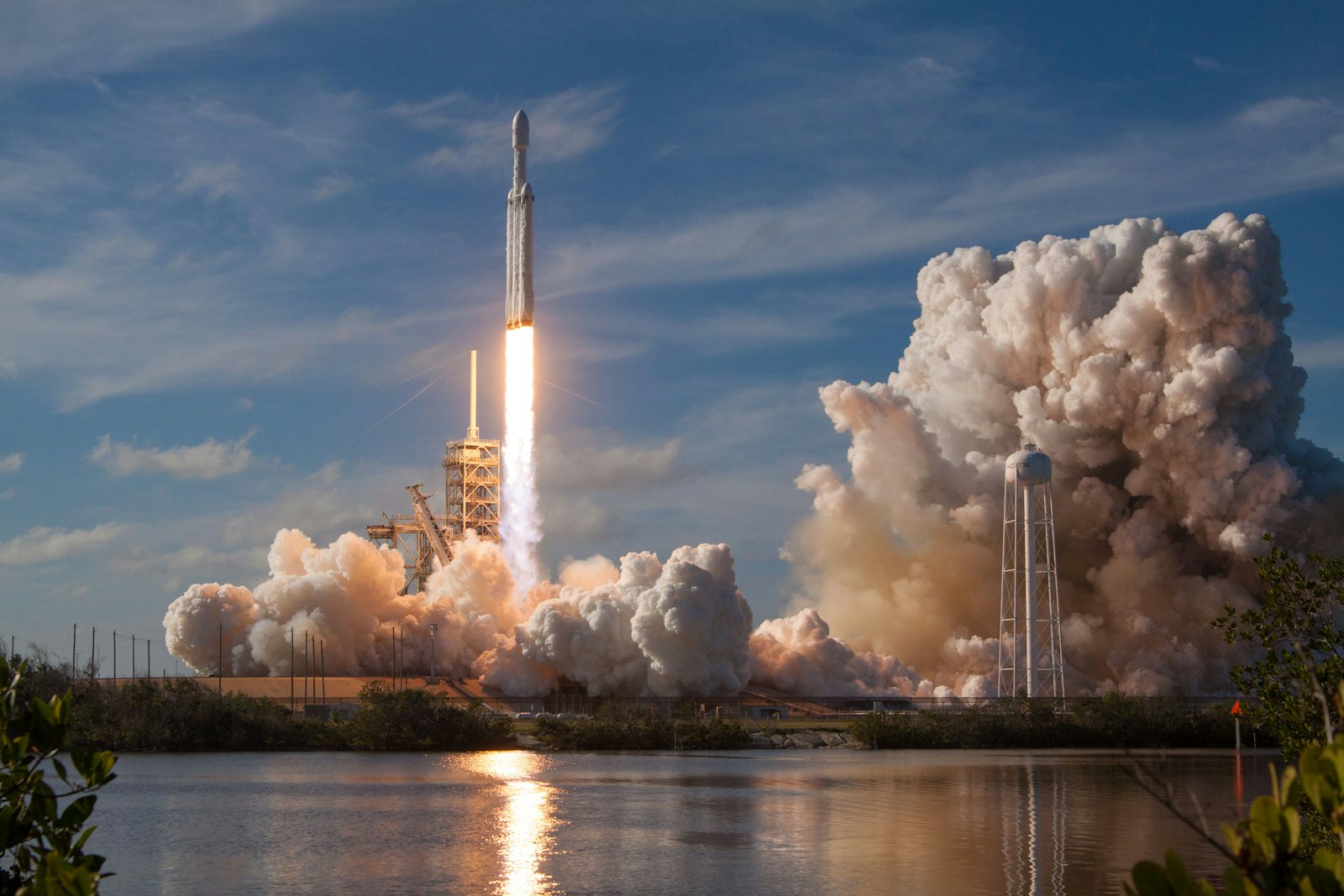
Google Research said Thursday it is ready to answer the least glamorous question in the orbital data-center pitch: can the company’s own AI chips survive space? Project Suncatcher’s first prototype rides SpaceX’s Transporter-18 rideshare as early as October 1, tucked into a refrigerator-sized Planet Labs satellite nicknamed MVP and carrying four Trillium Tensor Processing Units.
That is not a floating Gemini factory. It is a stress test for vibration, radiation, vacuum cooling, and short AI workloads, with a 2027 follow-on planned for laser links between satellites. Reuters, Ars Technica, and Google’s own explainer all agree on the outline; the interesting part is how small the first numbers are once you put them next to terrestrial AI halls.
What launches next week
According to Google’s September 24 Project Suncatcher update, the mission partners with Planet on the upcoming Transporter-18 flight. Ground work already included three-axis vibration shakes meant to mimic launch loads (components can see 50–100 g) and proton-beam radiation runs at UC Davis’s Crocker Nuclear Laboratory while TPUs executed AI jobs. Google says Trillium parts survived a total ionizing dose greater than a five-year LEO mission in those lab tests. Orbit is still the only full dress rehearsal.
Ars Technica’s reporting adds the scale that marketing decks skip. MVP’s solar panels deliver about one kilowatt, roughly a microwave’s power budget. The four TPUs will run Gemini workloads in bursts of about 15 minutes before the radiator-based cooling system needs the chips to idle so heat can radiate into space. There is no air up there, so heat pipes and radiators replace fans. The spacecraft itself is Planet’s; Google’s contribution is the AI payload bolted into an existing bus so the company could fly sooner than a pair of custom birds originally aimed at early 2027.
Geeknewz numbers check
Google’s pitch for LEO solar is “up to eight times” more harvestable sunlight than a typical ground site, thanks to near-constant sun in the right orbits and no night, clouds, or thick atmosphere. Stack that claim against this first flyer:
| Metric | MVP (Oct 2026 test) | What Google is aiming toward |
|---|---|---|
| TPU count | 4 Trillium chips | Dozens per satellite in later designs |
| Solar power | ~1 kW | Constellations built for large ML loads |
| Compute duty cycle | ~15-minute Gemini bursts, then cool-down | Sustained distributed training/inference |
| Inter-sat links | Not the point of this flight | High-bandwidth lasers tested with two sats in 2027 |
| Mission goal | Learn failure modes | Decide if space ML is engineering, not sci-fi |
Read the table left to right and the story stops sounding like “AI moves to orbit next month.” It sounds like a methodical moonshot: prove the silicon, then prove the plumbing, then prove the network. Google compares the pace to early autonomous driving and quantum work, which is another way of saying you should not reorder your cloud bill around one rideshare slot.
Why the cooling and laser chapters matter
TPUs dump heat into a tiny footprint. In vacuum you cannot blow air across them, so Google is testing heat pipes plus radiators and a malleable thermal interface that couples chips to aluminum and copper paths. If the 15-minute limit holds in orbit, every future design has to grow radiator area or change how aggressively workloads are scheduled. Separately, cluster AI needs fat pipes between nodes. Existing space lasers are tuned for long-haul, low-rate links; Suncatcher wants short-range, high-rate beams precise enough that Google likens aiming to hitting a coin-sized target from miles away while both ends move. That experiment waits until 2027.
Musk, Bezos, and others have sold orbital compute as an escape hatch from grid fights and local politics around terrestrial data centers. Google’s first flight is narrower and more useful: instrumented failure hunting. Reuters notes peers such as SpaceX and Starcloud are also chasing space compute ideas, which is why a Planet-hosted MVP still matters even if it never trains a frontier model.
Geeknewz take
Watch October 1 for whether four TPUs stay healthy and whether the thermal story matches the lab. Treat everything else as a research roadmap until the 2027 laser pair flies and launch economics get closer to Google’s own break-even talk from the earlier Suncatcher paper. Orbital AI is real engineering now. It is not a product you can buy a rack of yet.
Sources: Google Research; Reuters; Ars Technica