
The Financial Stability Board, the G20's financial-risk watchdog, published a note on Monday, October 12, warning that global stablecoins and the national rules around them "remain untested in severe stress and insolvency." It flags the multi-issuer setup, where affiliated companies jointly issue one token but hold separate reserves, as the arrangement that can jam when a run hits one company and the reserves sit with another.
The note went out with a letter from FSB Chair Andrew Bailey, governor of the Bank of England, to G20 finance ministers and central bank governors ahead of their October 15 meeting. None of it is binding, as CoinDesk points out, so it's up to each G20 country to act on it.
If you hold stablecoins, the useful question is which company you'd redeem with if holders rushed the door. The best-known multi-issuer coin is USDC, and Circle's own EU terms already describe the friction the FSB is talking about. Circle's MiCA Redemption Policy, last updated September 15, says USDC is co-issued by Circle Internet Financial Europe SAS (Circle France) in the EEA and by Circle Internet Financial, LLC outside it. Holders in the EEA redeem with Circle France. Everyone else redeems with Circle LLC.
The policy's name for a breakdown in that split is a "Stress Event," a period when rebalancing USDC reserves between Circle France and Circle LLC can't be completed. During a Stress Event, redemptions may be deferred past the normal timeframe. For retail holders that timeframe is no more than five business days. EEA crypto platforms can face a temporary cap on how much USDC they redeem, and other holders can face measures to limit cross-border arbitrage. The right to redeem at par stays in place. That's a disclosed safeguard rather than a sign of trouble, but it's the FSB's worry written into an issuer's own terms.
The FSB puts the stablecoin market at around $300 billion as of mid-2026, essentially unchanged from a year earlier, with 99% of the value pegged to the US dollar. Most use is moving in and out of crypto, though in some emerging economies the coins also work as savings. An issuer may not know who holds the tokens or where redemptions will land. Round-the-clock trading can pressure the peg, because reserve markets keep ordinary hours, and a run can spill over through reserve fire sales and bank-deposit withdrawals. Some issuers sit in lightly regulated places, which makes it harder to say which country's insolvency rules apply.
Bailey's letter puts the coordination problem in one line: "Global stablecoin arrangements are inherently cross-border, yet national regulations are taking shape at different speeds and cross-border cooperation in this area is still in its infancy." The FSB's next steps are closer monitoring of where holdings, redemptions, and reserves sit, more cross-border cooperation as countries implement its 2023 recommendations, and a look at how issuers plan for distress or failure.
In October 2025 the EU's systemic-risk board, the ESRB, recommended that the European Commission not treat third-country multi-issuer schemes as permitted under MiCA, citing run risk and the chance that reserves can't move between countries.
Nothing changes for USDC holders today, and the FSB isn't saying any coin is unsafe. If you hold stablecoins as savings rather than for trading, find out which entity you'd actually redeem with and read its stress clause. Spreading a large balance across issuers, or keeping savings in an insured bank account, is the conservative move. Watch what the G20 does with the note on October 15, and whether the EU moves on multi-issuer coins.
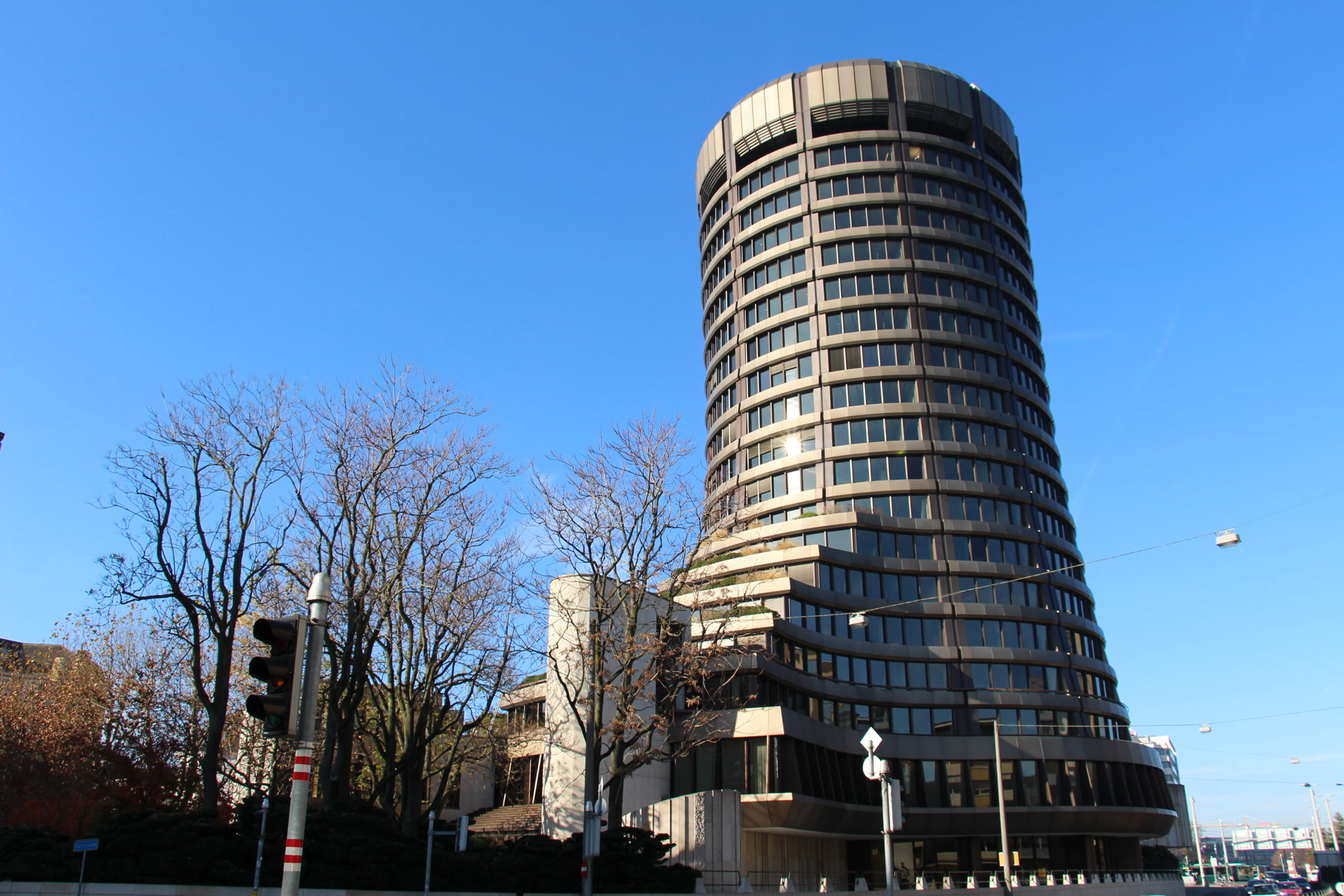
Photo: Fred Romero / Wikimedia Commons, CC BY 2.0.
.jpg)