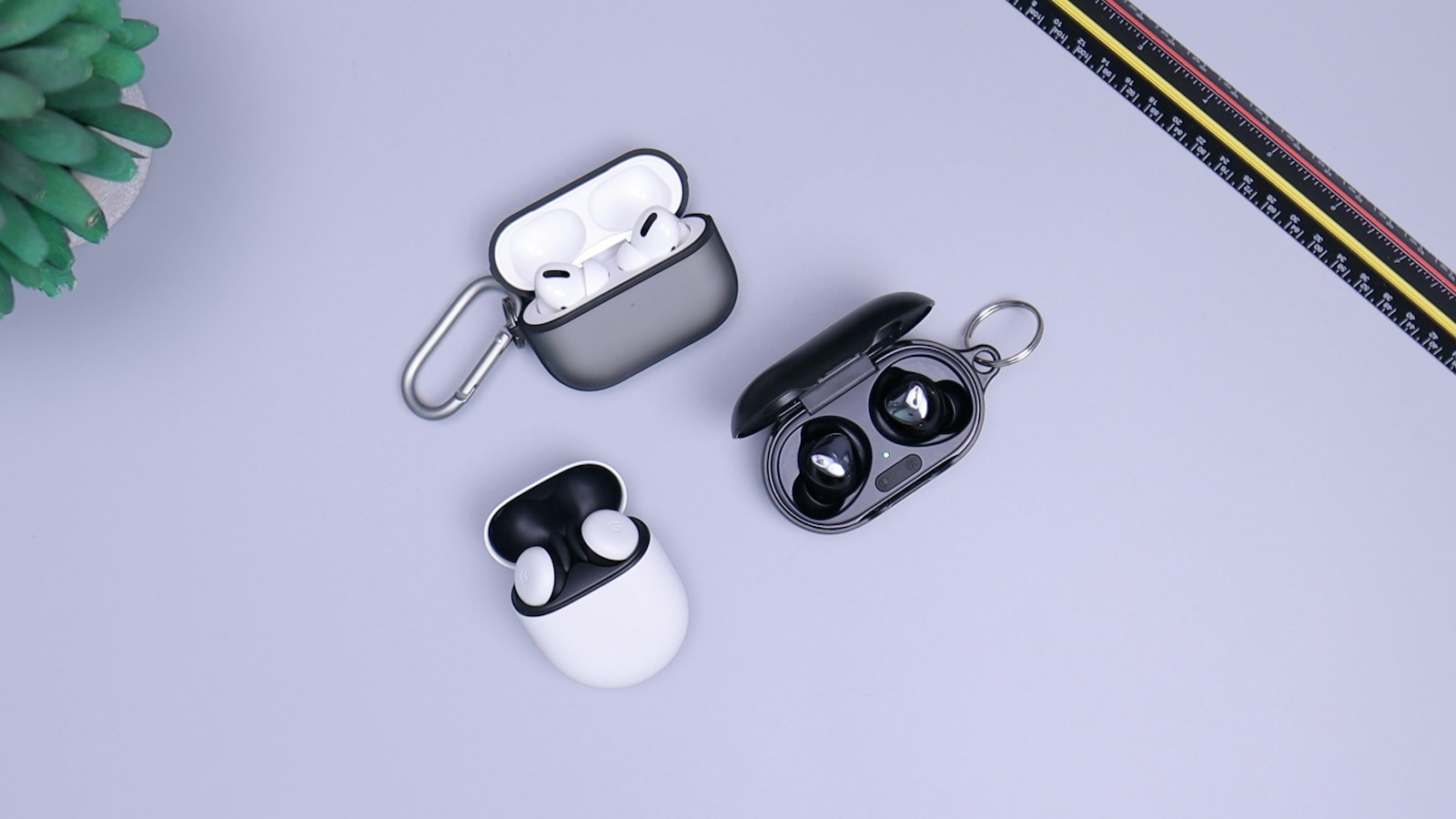
Apple promised that AirPods 5 would finally make open-ear noise cancellation feel like more than a checkbox. Cult of Mac’s Ed Hardy spent real time with them and came back with a blunt verdict: the jump over AirPods 4 is big enough that his usual “skip a generation” advice does not apply this time.
That matters because these are still the affordable AirPods. The standard pair with a USB-C case starts at $129. The wireless-charging version is $149 and adds the on-stem volume swipe a lot of people already know from AirPods Pro. Soft silicone tips are still not part of the deal. The buds sit in your ear the way AirPods 4 did, which is either the whole point or a dealbreaker depending on your ear shape.
ANC that actually quieted the yard
Hardy’s favorite proof was outdoor. With ANC on, the late-summer insect hum mostly vanished, while sharper bird calls still poked through. Music playing from a speaker in the next room dropped to something he could barely make out until he pulled the buds out. Apple’s claim of up to 50% more external-noise reduction versus AirPods 4 seems to match what he heard in practice.
He is careful not to oversell it. AirPods Pro 3 still win if you want near-silence. What changed is the floor for the open-ear line. AirPods 4 felt like “active noise reduction.” AirPods 5 feel like they are doing real cancellation work without sealing your ear canal, which is the trick Apple keeps selling to people who hate tips.
Richer sound, same silhouette
Apple talks about a multiport acoustic architecture and next-generation Adaptive EQ. Hardy’s A/B listening with AirPods 4 and older AirPods 3 translated that into richer bass without muddy speech, which matters if you live in podcasts the way he does. Switching between generations did not take long before the difference was obvious.
Design-wise, almost nothing moved. Same open-ear shape as AirPods 4, and the buds even fit the older charging case in his checks. If AirPods 4 stayed put on your runs, these should too. If they never did, Apple still has not given you a fit dial.
Stem volume, Live Translation, and the battery reality
The $149 wireless-case model adds stem volume control, which Hardy used even on bike rides instead of fishing for the phone. Live Translation is on the base model now, though he found it merely okay on an iPhone 17 when people talk fast. Personalized Spatial Audio is still more fun than essential. Find My remains the feature that lowers your stress when a bud vanishes under a couch cushion.
Battery claims look familiar: about five hours with ANC on the premium pair, four on the cheaper one, with the case bringing totals to roughly 22 or 20 hours. Hardy’s light-to-medium use stretched three or four days between wall sessions.
Who this is actually for
Hardy’s review quietly draws three buyer buckets. Tip-haters who bounced off AirPods Pro land in the sweet spot, because they finally get meaningful ANC without a seal. Ecosystem lock-in shoppers who bounce between iPhone, iPad, and Mac still get the automatic switching that makes third-party buds feel like chores. And people stuck on AirPods 3 get a sound and silence upgrade that is audible in minutes, not in a lab chart.
The people who should wait are existing AirPods Pro 3 owners and anyone whose ears reject the classic AirPods shape. Apple still has not solved fit diversity on this silhouette. No amount of Adaptive EQ fixes a bud that will not stay put on a sweaty commute.
Pricing helps the pitch. At $129 and $149, AirPods 5 sit under a lot of midrange ANC earbuds that ask you to live inside a companion app. You give up some cross-platform polish if your life is Android-first, which Hardy acknowledges by framing these as the best wireless earbuds for Apple users specifically. That honesty is useful. These are not a universal recommendation. They are a Cupertino-native one that finally earned its ANC slide.
Geeknewz take
If you are still on AirPods 3, this is an easy upgrade story. If you bought AirPods 4 and mostly cared about ANC in cafes or on transit, Hardy’s review is the first strong case that waiting was the wrong call. Pro buyers can stay put unless tip-free comfort is the hill you die on. One caveat Geeknewz notices in the fine print: Cult of Mac purchased its own unit, so this is not a soft-launch loaner review, which is usually a plus for candor.
Source: Cult of Mac (Ed Hardy)